
IURS2025 in Tokyo


Join us in Tokyo for IURS!

The IAFOR Undergraduate Research Symposium 2025 in Tokyo
In conjunction with The 17th Asian Conference on Education (ACE2025)

Key Information
  • Attendees must attend both Online and Onsite sessions. The presentation session is onsite in Tokyo, Japan, on Tuesday, November 25, 2025.
  • Symposium Dates:
    Day 1 (Online): Saturday, November 1, 2025 (10:00-13:00 JST | UTC +9)
    See times on other time zones
    Day 2 (Onsite in Tokyo): Tuesday, November 25, 2025 (Time: TBA)

  • Abstract Submission Deadline:
    Friday, August 22, 2025 for students outside Japan
    Wednesday, October 15, 2025 for students in Japan
  • Registration Deadline:
    Friday, October 3, 2025 for students outside Japan
    Friday, October 24, 2025 for students in Japan
  • Language Requirement: Participants are expected to participate and present in English.
    Participants should have an Intermediate to Advanced EFL/ESL proficiency level.

Back to Top


Facilitators

  • Professor Grant Black
    Professor Grant Black
    Chuo University, Japan
  • Dr Joseph Haldane
    Dr Joseph Haldane
    The International Academic Forum, Japan

  • Dr Melina Neophytou
    Dr Melina Neophytou
    The International Academic Forum, Japan

  • Apipol Sae-Tung
    Apipol Sae-Tung
    The International Academic Forum, Japan

Back to Top


Schedule

Attendees must attend both Online and Onsite sessions. The presentation session is onsite in Tokyo, Japan, on Tuesday, November 25, 2025.

Day 1 (Online): Saturday, November 1, 2025Day 2 (Onsite in Tokyo): Tuesday, November 25

All times are Japan Standard Time (UTC+9) - See times on other time zones

Symposium Venue: Online via Zoom

09:50-10:00: Delegate Check-in
Login to the Zoom session.

10:00-10:10: Welcome Announcement and Introduction
Grant Black, Chuo University & IAFOR, Japan
Apipol Sae-Tung, IAFOR, Japan

10:10-10:40: Session 1: Ice-Breaking Session & Self-Introduction
Grant Black, Chuo University & IAFOR, Japan
This icebreaker session encourages students to practice self-introduction and getting to know their peers.

10:40-10:50: Break

10:50-11:15: Session 2: Group Discussion
Grant Black, Chuo University & IAFOR, Japan
In this session, students have the chance to practice small group discussions. The topic could include their academic interests, their preparation to attend the symposium, and their future career paths.

11:15-11:25: Break

11:25-11:45: Session 3: Conferences and Presentations
Grant Black, Chuo University & IAFOR, Japan
Students learn how to conduct themselves at conferences during different types of presentations. Students will be guided on how to ask and answer questions, as well as how to deal with difficult situations and disagreements.

11:45-12:30: Session 4: Poster Review Session
Grant Black, Chuo University & IAFOR, Japan
Students will share their posters within the small groups. They are expected to share good practices and challenges, as well as the idea behind the poster, how they designed it, and their current progress.

12:30-12:40: Break

12:40-12:55: Session 5: Open-Mic: Share What You Learned
This session will focus on the skills involved in communicating ideas publicly. Students are expected to share what they have learned in today’s workshop.

12:55-13:00: Closing Remarks

All times are Japan Standard Time (UTC+9)
All IURS Tokyo 2025 delegates are expected to be in Tokyo and ready to present on Tuesday, November 25, 2025.

Event Venue
Toshi Center Hotel
Address: Hirakawacho 2-4-1, Chiyoda Ku, Tokyo
Phone: +81 3-3265-8211
Access: https://ace.iafor.org/location/

Symposium Schedule

09:30-10:00: Student Participant Check-in | Room 701 (7F)

10:00-10:15: Welcome Address | Room 701 (7F)
Grant Black, Chuo University & IAFOR, Japan

10:15-11:00: Discussion Session | Room 701 (7F)
What I Wish I Knew When…
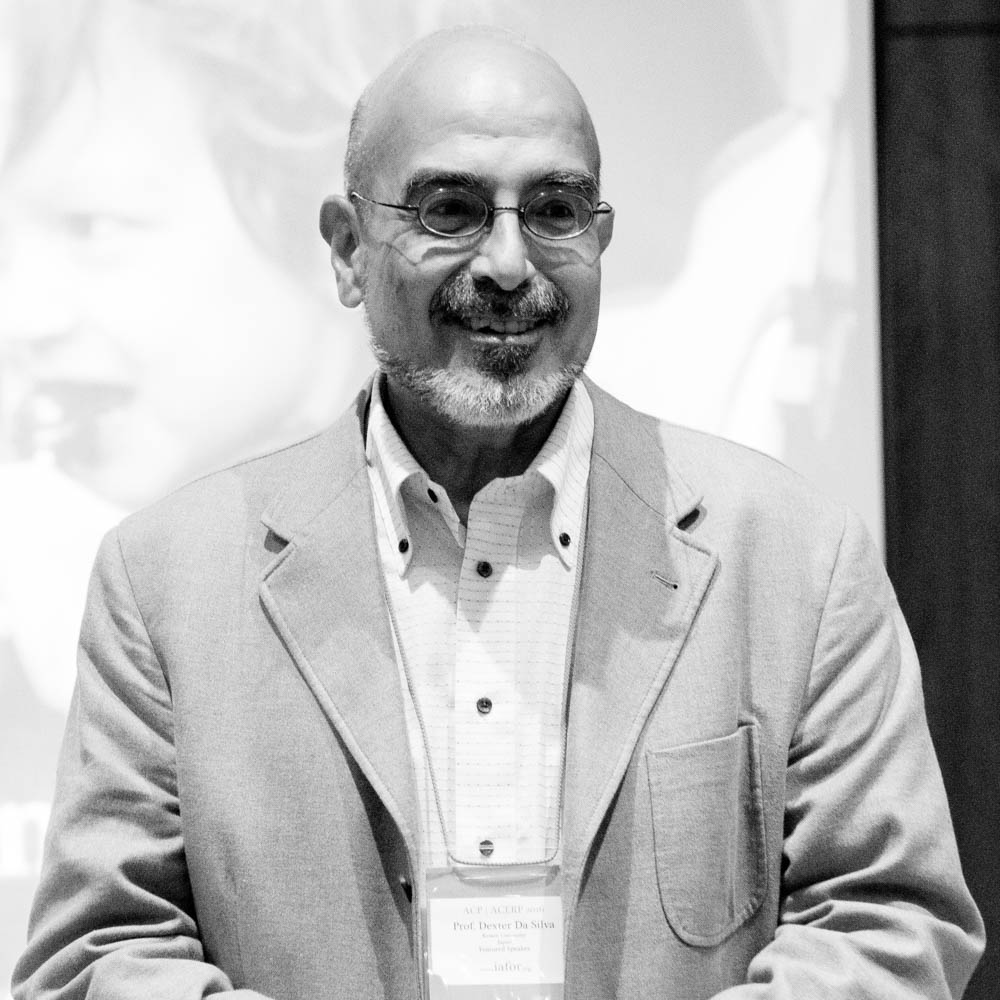
Dexter Da Silva, Keisen University, Japan
Tzu Bin Lin, National Taiwan Normal University, Taiwan
James W. McNally, University of Michigan, United States & NACDA Program on Aging

11:00-11:15: Break

11:15-11:40: Connection Workshop | Room 701 (7F)
Attending the Conference: Making Meaningful Connections
Grant Black, Chuo University & IAFOR, Japan

11:40-12:00: Presentation Workshop | Room 701 (7F)
How to Give an Effective Poster Presentation
Grant Black, Chuo University & IAFOR, Japan

12:00-12:35: Extended Break

12:35-13:30: Presentation Workshop | Room 701 (7F)
How to Give an Effective Poster Presentation (Practice and Performance)
Grant Black, Chuo University & IAFOR, Japan

13:30-13:45: Poster Set-up | Subaru Room (5F)
Poster set-up for Session 1 presenters

13:45-14:00: Short Break

14:00-15:00: Poster Presentation Session 1 | Subaru Room (5F)
Architecture, Geography and Urban Studies
Psychology and the Behavioral Sciences
Media, Film and Communication Studies
Science, Technology, Engineering & Math
Sustainability: Ecology, Energy and the Environment
Culture, Popular Culture and Cultural Studies

15:00-15:30: Break
Poster set-up for Session 2 presenters

15:30-16:30: Poster Presentation Session 2 | Subaru Room (5F)
Economics and Business Studies
Education
Language, Literature and Linguistics
Political Science: Administration, Governance and Finance
Sociology, Social Work and Social Concerns

16:30-16:45: Concluding Remarks
Grant Black, Chuo University & IAFOR, Japan

*Accompanying Professors and IURS Audience Delegates are invited to join the Poster Presentation Sessions


Programme & Abstract Book


Speakers

  • Professor Dexter Da Silva
    Professor Dexter Da Silva
    Keisen University, Japan
  • Professor Tzu Bin Lin
    Professor Tzu Bin Lin
    National Taiwan Normal University, Taiwan
  • Dr James W. McNally
    Dr James W. McNally
    University of Michigan, United States & NACDA Program on Aging

Back to Top


What to Prepare
Participants must bring a physical copy of their poster presentation onsite.
We are unable to print the posters onsite.

It is recommended that participants use one of the following sizes for their posters:
- A1 size (594 mm wide by 841 mm high)
- B1 size (728 mm wide by 1030 mm high)
- A0 size (841 mm wide by 1189 mm high)

What to Wear
Delegates should prepare formal wear for their presentations.
This entails suits for men and a suit or suit dress for women. Traditional clothing is permitted.
Jeans, athletic shoes, sneakers, boots, and sandals are not permitted.

Important
- This symposium is for university students currently enrolling in an undergraduate programme only
- Please contact us if you have not received any participation details within 7 days before the Online Day set for each symposium
- A certificate will only be given if the participant attends both days
- Please bring your student ID to the onsite day

Back to Top


How to Participate

  • Go to the online submission form
  • The information you enter will be used for Letters of Acceptance, Certificates, and Listings on the website
  • Submit your abstract (maximum 250 words)
  • Your abstract will be reviewed and the results will be returned to you by Monday, September 15
  • If your abstract is accepted you will be invited to register for the symposium
  • Upon payment of the registration fee, you will receive a confirmation email containing your official receipt

Presentation Format

The presentation format at IURS is poster presentation only.

(Onsite) Poster Presentation

A poster presentation provides a relaxed presentation atmosphere in which the presenter uses a poster pinned to a poster board (1800 mm high by 900 mm wide) to illustrate their research. Presenters will often engage with interested participants on a one-to-one basis, providing excellent opportunities for networking, discussion and relationship building. The dimensions of the poster boards are fixed. Therefore, posters should be printed in portrait rather than landscape orientation.


Submit an Abstract

We encourage submissions that approach the following streams from a variety of perspectives.

  • Architecture, Geography and Urban Studies
  • Culture, Popular Culture and Cultural Studies
  • Economics and Business Studies
  • Education
  • Ethics, Religion and Philosophy
  • History, Anthropology and Archaeology
  • Language, Literature, and Linguistics
  • Media, Film and Communication Studies
  • Political Science: Administration, Governance and Finance
  • Psychology and the Behavioral Sciences
  • Public Policy (including Health and Education)
  • Science, Technology, Engineering & Math
  • Sociology, Social Work and Social Concerns
  • Sustainability: Ecology, Energy and the Environment
  • Visual and Performing Arts


Register for the Symposium

To confirm your participation, please register by Friday, October 3, 2025. Registration fees are 15,000 JPY.

If you have any questions about registration please visit our FAQ page.

Registration Benefits

    - Listed as a presenter in the Symposium Guide
    - A Certificate of Presentation
    - Print-quality PDF of the Symposium Guide
    - Admission to all IURS sessions
    - Ability to watch recordings of all connected conference sessions during and after the conference (catch-up)

Online credit card payments are securely handled by PayPal and Stripe.
We accept the following payment methods:


*You will be redirected to the IAFOR online store

Professor Grant Black
Chuo University, Japan

Biography

Professor Grant Black is a professor in the Faculty of Commerce at Chuo University, Tokyo, Japan, where he has taught Global Skills and Global Issues since 2013. Grant is engaged in diverse roles as a global manager, systems builder, executive leader and university professor. His research and teaching areas include global management skills, intercultural intelligence (CQ) and organisational management. He also has taught Japanese Management Theory at J. F. Oberlin University (Japan), and a continuing education course in the Foundations of Japanese Zen Buddhism at Temple University Japan. Previously, he was Chair of the English Section at the Center for Education of Global Communication at the University of Tsukuba where he served in a six-year post in the Faculty of Humanities and Social Sciences. He holds a BA Highest Honors in Religious Studies from the University of California, Santa Barbara; an MA in Japanese Buddhist Studies from the University of California, Los Angeles; and a Doctor of Social Science (DSocSci) from the Department of Management in the School of Business at the University of Leicester. Dr Black is a Chartered Manager (CMgr), the highest status that can be achieved in the management profession in the UK. In 2018, he was elected a Fellow of the Chartered Management Institute (FCMI) and Fellow of the Royal Society of Arts (FRSA). Grant is President of Black Inc. Consulting (Japan), a Tokyo-based firm specialising in international and intercultural project management, communication projects, and executive leadership and training. He is the director of the Nippon Academic Management Institute (NAMI) and the author of Education Reform Policy at a Japanese Super Global University: Policy Translation, Migration and Mutation (Routledge, 2022). He serves as a Vice-President for the International Academic Forum (IAFOR).

Professor Grant Black is a Vice-President (at large) and a member of the Board of Directors of IAFOR.

Dr Joseph Haldane
The International Academic Forum, Japan

Biography

Joseph Haldane is the Chairman and CEO of IAFOR. He is responsible for devising strategy, setting policies, forging institutional partnerships, implementing projects, and overseeing the organisation’s business and academic operations, including research, publications and events.

Dr Haldane holds a PhD from the University of London in 19th-century French Studies, and has had full-time faculty positions at the University of Paris XII Paris-Est Créteil (France), Sciences Po Paris (France), and Nagoya University of Commerce and Business (Japan), as well as visiting positions at the French Press Institute in the University of Paris II Panthéon-Assas (France), The School of Journalism at Sciences Po Paris (France), and the School of Journalism at Moscow State University (Russia).

Dr Haldane’s current research concentrates on post-war and contemporary politics and international affairs, and since 2015 he has been a Guest Professor at The Osaka School of International Public Policy (OSIPP) at Osaka University, where he teaches on the postgraduate Global Governance Course, and Co-Director of the OSIPP-IAFOR Research Centre, an interdisciplinary think tank situated within Osaka University.

A Member of the World Economic Forum’s Expert Network for Global Governance, Dr Haldane is also a Visiting Professor in the Faculty of Philology at the University of Belgrade (Serbia), a Visiting Professor at the School of Business at Doshisha University (Japan), and a Member of the International Advisory Council of the Department of Educational Foundations at the College of Education of the University of Hawaiʻi at Mānoa (USA).

From 2012 to 2014, Dr Haldane served as Treasurer of the American Chamber of Commerce in Japan (Chubu Region) and he is currently a Trustee of the HOPE International Development Agency (Japan). He was elected a Fellow of the Royal Asiatic Society in 2012, and a Fellow of the Royal Society of Arts in 2015.

Dr Melina Neophytou
The International Academic Forum, Japan

Biography

Dr Melina Neophytou is the Academic Operations Manager at IAFOR, where she works closely with academics, keynote speakers, and IAFOR partners to shape academic discussions within The Forum, bring conference programmes together, refine scholarship programmes, and build an interdisciplinary and international community. She is leading various projects within IAFOR, notably The Forum discussions and the authoring of Conference Reports and Intelligence Briefings, and she oversees the Global Fellows Programme.

Born in Germany and raised in Cyprus, Dr Neophytou received her PhD in International Development from Nagoya University, Japan, in 2023, specialising in political sociology, the welfare state, and contentious politics. She received an MA in International Development from Nagoya University, with a focus on Governance & Law, and a BA in European Studies from the University of Cyprus, Cyprus.

Dr Neophytou’s research interests currently focus on how Artificial Intelligence (AI) is changing the relationship between state and society. Her current work examines technologies such as facial recognition (FRT) and biometric surveillance, and how these tools impact freedom of expression, protest, and social policy.

Apipol Sae-Tung
The International Academic Forum, Japan

Biography

Apipol Sae-Tung is an Academic Coordinator at IAFOR, where he contributes to the development and execution of academic-related content and activities. He works closely with the Forum’s partner institutions and coordinates IAFOR’s Global Fellowship Programme. His recent activities include mediating conference reports for the Forum’s international conference programme and facilitating the IAFOR Undergraduate Research Symposium (IURS).

Mr Sae-Tung began his career as a Program Coordinator for the Faculty of Political Science at Chulalongkorn University, Thailand. He was awarded the Japanese Government’s MEXT Research Scholarship and is currently pursuing a PhD at the Graduate School of International Development, Nagoya University, Japan. His research focuses on government and policy analysis, particularly on authoritarian regimes. He currently takes part in research projects on international student education in Thailand, Southeast Asian politics, Japan-Asia digital economy, and AI-language model training.

Mr Sae-Tung holds an MA in International Relations and Diplomacy from Thammasat University, Thailand, where he studied foreign policy analysis and Thailand-China relations. He also holds a BA in History from the same institution, with a focus on modern Western and Southeast Asian comparative history and historiography.

Mr Sae-Tung has interned for the United Nations Centre for Regional Development (UNCRD) in Japan, and the United Nations Educational, Scientific, and Cultural Organization (UNESCO) in Thailand. He served on the Lifelong Learning Team while with UNESCO, working specifically on projects enhancing education access through online platforms among Thai NEET individuals and supporting Myanmar migrant children, providing shelters and access to proper education along the Thai-Myanmar border.

Professor Dexter Da Silva
Keisen University, Japan

Professor Dexter Da Silva is Professor Emeritus at Keisen University in Tokyo, Japan, where he has been teaching for 35 years. He is an Educational Psychologist who has taught at junior high school, language schools, and universities in Sydney, Australia, and at various educational institutions in Japan. He was educated at the University of Sydney, Australia (BA, Dip. Ed., MA), and the University of Western Sydney, Australia (PhD). He has presented and co-presented at conferences throughout Asia, Australia, Europe, and the United States, and published or co-published a number of books, articles, and book chapters on education-related topics. He is a past president of the Asian Psychological Association and currently a Vice-President of IAFOR. As an Educational Psychologist, he is very interested in how Artificial Intelligence will continue to be incorporated into and impact research and theory on the nature, types, and uniqueness of Human Intelligence(s).

Professor Tzu Bin Lin
National Taiwan Normal University, Taiwan

Biography

Professor Lin has extensive working experience in academia, especially in diverse cultural settings and high-level leadership positions. He works in the Department of Education and serves the role of Vice-President for Teacher Education at the National Taiwan Normal University. He was the Associate Vice-President for Academic Affairs, head of the Center for Teaching and Learning Development (CTLD), Deputy director of the Office of Bilingual Education (OBE) and the Ministry of Education Funded Resource Center for EMI, deputy head of the Department of Education and head of the Practicum Office in the College of Teacher Education at the National Taiwan Normal University (NTNU). Prior to his current position at NTNU, he worked at Bournemouth University UK and the National Institute of Education (NIE), Singapore. Currently, he is an assistant editor of Cogent Education and an editorial board member in several international journals such as Asia TEFL (SCOPUS), and Educational Research for Policy and Practice (SCOPUS), and the Journal of Educational Research and Development (TSSCI). In the past decade, Prof. Lin published more than 80 papers and book chapters and conducted 30 research projects in the UK, Singapore and Taiwan.

Dr James W. McNally
University of Michigan, United States & NACDA Program on Aging

Biography

Dr James W. McNally is the Emeritus Research Scientist for the NACDA Program on Aging, located in the Institute for Social Research at the University of Michigan, United States. He was trained initially in forensic anthropology at the University of Maryland and then in formal demography at Georgetown University. As part of this PhD work, Dr McNally was awarded the first minor degree in social gerontology from the Population Studies and Training Center at Brown University, followed by a two-year postdoctoral appointment examining policy applications of health data at Syracuse University’s Center for Policy Research. After teaching at Brown University as an Assistant Research Professor, Dr McNally directed the NACDA Program on Aging from 1998 to 2025, building an internationally recognised collection of seminal studies on the aging lifecourse, health, retirement, and international aspects of ageing. In addition to lifecourse research, he has spent much of his career addressing mechanisms to maintain and strengthen family support networks, focusing on the needs of frail or cognitively impaired elders, presenting on these issues in the United States and internationally. Dr McNally serves on the International Academic Board of IAFOR.